- Free Consultation: 401-300-4055 Tap Here to Call Us





Rhode Island Condominium Law Changes: 2025–2026 Update


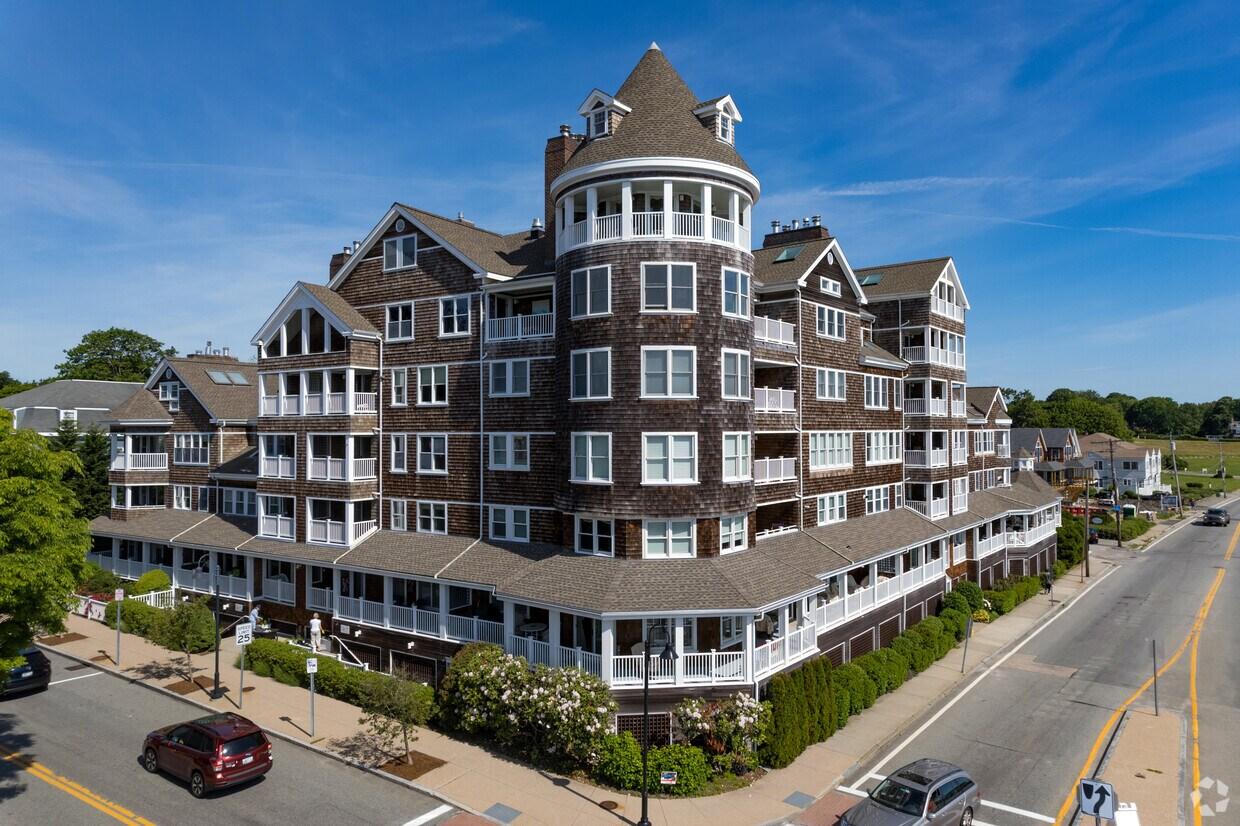
Rhode Island condominium law changes affect insurance deductibles, association meetings, lender approvals, and the governing documents owners and buyers should review. The General Assembly amended the Condominium Act in 2024 and 2025, the Supreme Court addressed owners’ meeting rights in Song v. Lemoine in 2025, and a legislative commission established in 2026 is studying further reform.
This update explains the enacted amendments, the decisions that govern recurring disputes, and the separate rules for assessment liens, purchaser protections, and construction warranties. It also distinguishes 2026 legislative proposals from requirements already in force. For assistance with a specific association, transaction, or dispute, review our Rhode Island condominium law practice.
In this article: statutory amendments; owners’ meeting rights; declaration amendments; assessment liens; buyer protections; construction warranties; and 2026 reform proposals.
Rhode Island Condominium Law Changes: The 2024 and 2025 Amendments
The Rhode Island Condominium Act, R.I. Gen. Laws chapter 34-36.1, generally applies to condominiums created in Rhode Island after July 1, 1982. Certain provisions also apply to older condominiums, subject to the limitations discussed below. Amendments effective June 17, 2024, addressed the recording of bylaws and rules. Separate amendments effective June 24, 2025, addressed insurance deductibles, electronic meetings and voting, and mortgagee approval. These changes affect the documents owners should request, the procedures boards should follow, and the insurance responsibilities that require attention before a loss occurs.
Insurance for the Association’s Deductible and Unit Improvements
Under R.I. Gen. Laws § 34-36.1-3.13(k), when the association maintains property insurance on individual units, each unit owner must maintain specified insurance to the extent reasonably available. The required coverage includes loss covered by the association’s policy but unpaid because of its deductible. It also includes improvements and betterments installed after the unit’s first conveyance to someone other than the declarant, if the association does not maintain that coverage.
Section 3.13(d)(4) makes the unit owner’s policy primary for the amount of covered loss to that owner’s unit that the association’s policy does not pay because of the deductible. An owner who fails to satisfy subsection (k) bears the specified expenses related to the unit in the amount of the applicable association deductible. Subsection (k)(2) also addresses the association’s lack of an obligation to apply common expenses following that noncompliance.
The 2025 insurance amendment requires written notice of deductible changes, including a statement of the owner’s legal obligation to notify the mortgagee. Owners should obtain the master policy’s current deductible information and ask their insurance agent whether their condominium policy and endorsements address these obligations. Boards should review both their notice procedures and the division of coverage between the association and owners. Disputes over a loss may also require review of the policy language and the issues addressed by our insurance claims practice.
Section 3.13(j) permits the insurance provisions to be varied or waived where every unit is restricted to nonresidential use. A wholly commercial condominium therefore requires separate review of its governing documents and insurance arrangements. This exception does not apply merely because some units have commercial uses.
Electronic Meetings, Voting, and Meeting Notices
Amended R.I. Gen. Laws § 34-36.1-3.08 permits board and unit-owner meetings to occur fully or partly through telephone, video, or another interactive electronic process. Participants must be able to communicate simultaneously. Electronic presence satisfies the applicable quorum and voting requirements, and meeting notices must identify the platform and provide access information. Meetings held at a physical location must be in the county where the condominium is located.
An association meeting must be held at least annually. Subsections (a) and (b) require notice ten to sixty days before a meeting. The notice must state the time, place, and agenda, including proposed amendments, budget changes, and director or officer removal. Hand delivery or prepaid United States mail remains the prescribed method unless the owner has consented to an authorized electronic-notice method.
The voting authorization has conditions. When a board meeting proceeds under subsection (c) and a quorum has been established, the board may vote electronically, including by email, on matters properly before it. At a qualifying unit-owner meeting with a quorum, owners may vote through the authorized electronic methods or by mail-in ballot as the board determines. The statute also permits electronic signatures for votes or proxies when the governing documents require signatures.
Email notice requires an address designated in writing and the owner’s written consent. Posting notice to an association or managing agent’s secure website or portal also requires written consent. Owners may revoke that consent in writing. Subsections (c) and (e) authorize these methods notwithstanding contrary declaration or bylaw provisions. For condominiums created before July 1, 1982, that language must also be considered with the protection for existing governing documents in § 34-36.1-1.02(a)(2). Its effect on a particular provision requires review of the condominium’s documents and applicable law. Boards should retain the consents and meeting records documenting compliance.
The amendment also addresses owner-requested special meetings. The board must call a meeting requested by owners holding at least twenty percent of the votes, or a lower percentage specified in the bylaws, when its stated purpose concerns a declaration or bylaw amendment, budget rejection, removal and replacement of a director or officer, or another matter on which owners may vote. The exception is the general election of board members, which occurs at the annual meeting. The meeting notice must identify the agenda and the proposed actions.
Mortgagee Approval and the 65-Day Response Period
Under R.I. Gen. Laws § 34-36.1-2.19(b), a procedure now governs requests for mortgagee approval required by the Act, declaration, or bylaws. Written requests must be sent through the United States Postal Service by both regular mail and certified mail, return receipt requested, to the mortgagees at the addresses identified in mortgage documents recorded in the land evidence records. Every request must reference this statutory section.
A mortgagee that does not provide a written denial to the requesting party within sixty-five days after mailing is deemed to have approved the request. Because the period begins with mailing and the statute prescribes how the request must be sent, associations should retain the request, mailing records, and any response. The association must also satisfy the other approval and procedural requirements applicable to the proposed action.
Recording Bylaws, Referenced Rules, and Amendments
The 2024 amendment to R.I. Gen. Laws § 34-36.1-3.06(c)–(d) requires the association’s bylaws, rules referenced in the declaration or bylaws, and amendments to those documents to be recorded in the municipal land evidence records. Recording is required in every municipality containing any portion of the condominium.
Bylaws and rules recorded after the declaration must be certified by two executive-board members unless the declaration or bylaws require greater certification. Boards should compare their current governing documents with the recorded versions before implementing amendments or providing documents for a sale. Buyers and title examiners should request the association’s current documents and compare them with the land evidence records; the statutory recording requirement does not establish that every association has complied.
How the Amendments Apply to Pre-1982 Condominiums
R.I. Gen. Laws § 34-36.1-1.02 extends specified provisions of the modern Act to condominiums created before July 1, 1982. The 2024 additions include the recording provisions in § 3.06(c)–(d). The 2025 additions include mortgagee approval under § 2.19(b), meetings and notice under § 3.08, and insurance responsibilities under § 3.13(d) and (k). Section 3.20, concerning enforcement of declarations, bylaws, and rules, was already among the provisions listed before the 2025 amendments.
The applicability provision expressly limits the listed sections to events and circumstances occurring after July 1, 1982, and states that they do not invalidate existing provisions of the older condominium’s declaration, bylaws, plats, or plans. Older condominiums may also voluntarily accept the Act through the unanimous written and recorded agreement described in § 1.02(a)(1). Determining which requirements govern an older association therefore requires reviewing its creation date, recorded documents, any adoption agreement, and the particular statutory provision involved.
In Foley v. Osborne Court Condominium, 724 A.2d 436 (R.I. 1999), the Supreme Court explained that “certain provisions of the act apply retroactively,” subject to the statutory protection for existing governing documents. The Court remanded issues concerning the association’s bylaws and the challenge to statutory authority. The decision should not be read as a blanket ruling that every modern provision overrides the documents of a pre-1982 condominium.
Rhode Island Condominium Meetings: What Song v. Lemoine Decided
In Song v. Lemoine, 334 A.3d 958 (R.I. 2025), condominium unit owners sought a special meeting after the board changed the method of allocating gas charges. The owners submitted a petition and proposed meeting notice, but the board substituted a different notice. The dispute illustrates why an association must examine the owners’ petition, its bylaws, and the statutory meeting requirements together.
The Supreme Court determined that the owners satisfied the applicable petition requirement and that their proposed notice complied with § 34-36.1-3.08. The Court stated: “These unit owners were entitled to the meeting they sought.” Id. at 964. It also emphasized the Act’s consumer-protection purpose and the ability of lay owners to prepare a petition without exacting judicial scrutiny of imperfect wording. The Court held that the trial justice overstepped by evaluating the merits of the proposed agenda items and granting relief the parties had not requested. The Supreme Court vacated the portion of the judgment favoring the defendants and remanded.
The decision did not award damages or attorney’s fees. It allowed further proceedings on the severed claim seeking attorney’s fees and punitive damages under § 34-36.1-4.17, while noting possible nominal damages and immunity under the bylaws. The Court also left possible mootness for consideration on remand because the board reportedly had adopted the owners’ preferred billing formula. Id. at 964 n.2, 965. Owners and boards should distinguish the right to a properly requested meeting from the separate questions of available relief and liability.
Amending Condominium Declarations: Voting Rights, Unit Boundaries, and Development Rights
Under § 34-36.1-2.17(a), the general amendment threshold is 67% of the association’s allocated votes, or a larger majority specified in the declaration, subject to statutory exceptions. A smaller threshold may be specified only where all units are restricted exclusively to nonresidential use. Subsection (d) generally requires unanimous consent for changes involving special declarant rights, the number of units, unit boundaries, allocated interests, or restricted uses, except where another provision of the Act expressly permits or requires otherwise. The particular amendment therefore matters as much as the percentage voting for it.
Restaurant Uses and Existing Restrictions: Epic Enterprises
In Epic Enterprises LLC v. The Bard Group, LLC, 186 A.3d 587 (R.I. 2018), the defendant owned nine of thirteen units and controlled 70.8% of the voting share. It unilaterally amended a declaration that prohibited commercial kitchens and food service to permit restaurant use. The Supreme Court held that changing this restricted use required unanimous owner approval under § 34-36.1-2.17(d), despite the defendant’s substantial majority. The Court concluded: “Thus, we conclude that the second amendment to the declaration was invalid.” Id., slip op. at 5.
Development Deadlines and Invalid Unit Creation: The IDC Decisions
In America Condominium Association, Inc. v. IDC, Inc., 844 A.2d 117, 130 (R.I. 2004), amendments purported to extend the developer’s rights beyond December 31, 1994. The Court held that “the voting procedure employed at the special meetings improperly deprived the individual unit owners of their statutory right to give consent.” The amendments were void from inception, and the development rights expired. Approval by association representatives did not substitute for the individual owners’ required consent.
On reargument, America Condominium Association, Inc. v. IDC, Inc., 870 A.2d 434 (R.I. 2005), clarified that the South and West parcels had never been validly created as units: “they were, and remain, common elements.” Id., slip op. at 9. The attempted North unit also failed the applicable requirements. This is not a rule that undeveloped land can never be a condominium unit. The Court recognized limited airspace-unit circumstances and land-only units authorized after 1991. The defect was failure to satisfy the statutory requirements for these particular units, followed by expiration of development rights. Id., slip op. at 9–12.
Unit Expansions and Common Elements: Sisto and Mardo
In Sisto v. America Condominium Association, Inc., 68 A.3d 603, 614 (R.I. 2013), the proposed expansion would change the unit’s boundaries. The Court held that “he must obtain the unanimous consent of all other unit owners before going forward with that expansion.” Calling the added area a limited common element could not avoid the statutory boundary-change requirement. The Court did not decide whether the expansion also changed allocated interests. Its holding should not be treated as a universal unanimity requirement for every common-area alteration.
In America Condominium Association, Inc. v. Mardo, 140 A.3d 106 (R.I. 2016), the Court reaffirmed liability for another unauthorized expansion, explaining that “the Trust wrongfully appropriated the limited common element on which its expansion is built.” Id., slip op. at 17. It nevertheless upheld the refusal to order removal under exceptional circumstances involving prior approvals, an existing foundation, and the circumstances surrounding construction. The Court sustained the restriction against further expansion and separately vacated the denial of attorney’s fees under the declaration. The decision distinguishes an unlawful expansion from the appropriate remedy; it did not make the expansion lawful.
Amendment Challenges and the One-Year Period: Anton
In Anton v. Houze, 277 A.3d 695 (R.I. 2022), the Court applied § 34-36.1-2.17(b)’s one-year period after recording to an amendment adopted with the required approval and recorded. It held: “The Houzes’ challenge to the first amendment, more than ten years later, is plainly untimely under the act.” Id., slip op. at 15. The Court distinguished IDC, where defective owner consent rendered amendments void from inception. Owners should seek prompt advice about both the recording date and the asserted defect; alleging invalidity does not necessarily avoid the one-year limit.
Expressly Reserved Development Rights: Belvedere
In Belvedere at Bristol Master Condominium Association v. 423 Hope Street Redevelopment, LLC, No. PC-2023-01337, 2024 WL 1861181 (R.I. Super. Apr. 23, 2024), the Superior Court upheld a declarant’s conversion of common elements into limited common elements under rights expressly reserved in that declaration. It stated that “the Court finds that the Sixth Amendment was a lawful exercise of Declarant’s development rights.” Id., slip op. at 18. This trial-court decision illustrates a specific statutory and declaration-based exception to owner voting requirements. Reserved rights must be evaluated with the Act, their deadlines, the affected property descriptions, and recorded amendments; governing documents cannot simply override mandatory statutory protections.
Declaration disputes often turn on recorded instruments, voting records, notice, and the precise relief requested. Our real estate litigation practice addresses disputes involving property rights and condominium governing documents.
Assessment Liens: Rhode Island’s Superpriority Lien
A condominium association has a lien when an assessment becomes due. Under R.I. Gen. Laws § 34-36.1-3.16(b), part of that lien takes priority over a previously recorded first mortgage. This superpriority portion covers six months of common expense assessments based on the association’s periodic budget immediately preceding foreclosure, calculated without acceleration. It also includes collection costs and reasonable attorney fees up to $2,500, plus foreclosure costs up to $5,000. The combined fees-and-costs cap is $7,500. Special assessments, late charges, fines, penalties, and interest are excluded from the priority amount, although additional amounts may remain enforceable against the owner.
Why the distinction matters to mortgage lenders
In Twenty Eleven, LLC v. Botelho, 127 A.3d 897, 904–06 (R.I. 2015), the Supreme Court explained that “foreclosure of the super-priority lien extinguishes the first mortgage” unless the first mortgagee redeems within the statutory period. A valid foreclosure of a relatively small assessment lien can therefore eliminate a substantially larger mortgage interest. The Court distinguished foreclosure of only the subordinate portion of an association’s lien, which leaves a superior first mortgage intact. It reversed dismissal of the foreclosure purchaser’s complaint and remanded for further proceedings. The decision concerns the mortgage lien; extinguishing that security interest does not itself eliminate the underlying debt.
Notice and timing require close attention. After common expenses have been delinquent for at least sixty days, § 34-36.1-3.16(b)(4) requires notice to the owner and first mortgagee by certified mail, return receipt requested, and first-class mail. Failure to notify the first mortgagee preserves the six-month assessment priority but excludes costs and attorney fees from that priority amount. Under subsection (e), the lien is extinguished unless enforcement proceedings begin within six years after the full assessment amount becomes due.
Section 34-36.1-3.21 imposes additional foreclosure notice requirements. Subsection (a)(4) requires notice to the first mortgagee within seven days after sale. The lender’s thirty-day redemption period under subsection (c) runs from the date that post-sale notice is sent. Redemption requires payment of all assessments due together with collection and foreclosure attorney fees and costs. Lenders should review assessment notices promptly and evaluate payment before foreclosure or timely redemption afterward. Auction purchasers likewise need to examine the lien’s priority and compliance with the statutory procedures.
Buying a Rhode Island Condominium: Know Your Statutory Protections
The Condominium Act provides different disclosure and cancellation rights for developer sales and resales. These requirements have statutory exemptions, including certain foreclosure, court-ordered, and gratuitous transfers. Buyers should establish which protections apply before relying on a cancellation deadline.
Developer sales and public offering statements
A seller required to provide a public offering statement must deliver it, with amendments, before conveyance and no later than the sales contract date. The disclosures prescribed by § 34-36.1-4.03 address the project, fees, budgets, title matters, warranties, litigation, insurance, and unusual or material circumstances.
Under § 34-36.1-4.08, a purchaser who did not receive the statement more than ten days before signing may cancel before conveyance within ten days after first receiving it. Cancellation carries no penalty, and payments must be refunded promptly. The statute specifies delivery or mailing of cancellation notice. If a person required to provide the statement and amendments conveys the unit without doing so, the purchaser may recover ten percent of the sales price in addition to other available damages or relief.
Resale certificates and the five-day cancellation period
For a covered resale, § 34-36.1-4.09 requires the selling owner to furnish the declaration, bylaws, rules, and an association certificate addressing twelve categories. These include assessments and other fees; anticipated capital expenditures for the current and next two fiscal years; reserves; regularly prepared financial statements, if any; the budget; judgments and pending litigation; insurance; and specified restrictions or known violations.
The association must furnish the certificate within ten days after the owner’s request and may charge no more than $125 for an electronic or paper copy. Failure to comply within ten days of the owner’s written request may result in a statutory civil penalty. A purchaser is not liable for unpaid assessments or fees exceeding the amount stated in the certificate.
The cancellation cutoff is particularly important: the purchase contract remains voidable until the certificate is provided and for five days afterward, or until conveyance, whichever occurs first. Closing before the five days expire therefore ends this statutory cancellation right.
As part of a condominium purchase or other real estate transaction, buyers should examine the certificate alongside the budget, reserve information, governing documents, and available financial records before closing. These materials can identify concerns about future expenses, special assessments, insurance, and litigation. They do not guarantee that every developing problem has been disclosed or resolved.
Construction Defects: Warranties and the Deadlines That Control Them
The Condominium Act’s warranties of quality
Section 34-36.1-4.14 provides implied warranties concerning ordinary use, defective materials, legal compliance, sound engineering and construction standards, and workmanship. These obligations apply to declarants and certain persons selling real estate for their own account. They address qualifying improvements made or contracted for by the seller and improvements made before condominium creation. The declarant’s implied warranties transfer with subsequent unit conveyances.
For residential units, § 34-36.1-4.15 makes general disclaimers ineffective. A purchaser-signed instrument may disclaim a specified defect or specified failure to comply with applicable law when that matter became part of the bargain.
When statutory warranty claims accrue
Under § 34-36.1-4.16, the default filing period for statutory warranty claims is six years after accrual. The parties may reduce it to no less than two years; a residential reduction requires a separate instrument executed by the purchaser.
For a possessory unit interest, accrual ordinarily occurs when the purchaser to whom the warranty was first made takes possession. For a nonpossessory interest, acceptance of the conveyance instrument controls. Common-element claims generally accrue upon completion or the applicable first conveyance to a bona fide purchaser, whichever is later, with specific rules for added portions of a condominium. Lack of knowledge ordinarily does not postpone accrual. However, an explicit warranty of future performance or duration accrues when the breach is discovered or its stated warranty period ends, whichever occurs earlier.
Separate rules for common-law construction claims
In Boghossian v. Ferland Corp., 600 A.2d 288, 290 (R.I. 1991), the Court distinguished a contract-based construction claim from tort claims, explaining that “the tort statute of limitations of § 9-1-29 cannot apply.” It applied the general civil limitations statute to the claim before it. Later decisions further defined the common-law implied-warranty deadlines.
Nichols v. R.R. Beaufort & Associates, Inc., 727 A.2d 174, 179, 181–82 (R.I. 1999), held that “such claims do not require privity of contract” for subsequent purchasers asserting breach of the implied warranties of habitability and workmanlike quality against builders for latent defects. The Court imposed limits concerning reasonable inspection, causation, discovery within ten years after substantial completion, and suit within three years of actual or constructive discovery.
In Mondoux v. Vanghel, 243 A.3d 1039, 1045 (R.I. 2021), the Court stated, “we extend our holding in Nichols to apply to original homeowners.” For these common-law implied-warranty claims, a latent defect must be discovered within ten years after substantial completion. Suit must follow within three years after discovery or when due diligence should have revealed the defect. This is not a general thirteen-year filing period for every construction claim.
Separately, § 9-1-29 generally bars covered tort claims against architects, engineers, contractors, subcontractors, and material suppliers more than ten years after substantial completion. Owners and associations should obtain prompt evaluation of suspected defects and the applicable warranties, documents, and dates.
Our residential construction defects page discusses related disputes involving defective construction. A condominium claim also requires review of the declaration, unit and common-element boundaries, applicable warranties, and the association’s authority to act.
2026 Condominium Reform: The Study Commission and Legislative Proposals
In June 2026, Rhode Island established a sixteen-member special legislative commission to examine condominium governance, transparency, accountability, and long-term affordability. The joint resolution, H8008 Substitute A, directs the commission to report its findings and recommendations by December 31, 2027. Its membership includes legislators, housing and municipal representatives, lenders, insurers, builders, a condominium-law attorney, a property-management representative, and two condominium owners. The General Assembly’s announcement confirms the commission’s creation.
The 2026 session also considered specific proposals. S2899 Substitute A, which passed the Senate, addressed open board meetings, owner access to records, and periodic independent financial reviews for associations governing more than twenty units. S2692 Substitute A addressed condition surveys and reserve studies. S2896 Substitute A addressed the allocation of association and owner insurance responsibilities, deductibles, access to damage appraisals, and authority over repairs.
As of November 6, 2026, those three substantive proposals do not appear in the official list of 2026 public laws. Their proposed requirements should not be treated as enacted amendments. The commission’s creation likewise does not itself impose new reserve-study, insurance, or open-meeting duties. Its assignment includes reviewing practices in other states, purchaser understanding, dispute resolution, and affordability challenges. Associations can evaluate their existing records, finances, insurance, and governing procedures while monitoring the commission’s recommendations and any later legislation. Whether additional requirements will be adopted, and what they would contain, remains unresolved.
Putting the Rhode Island Condominium Law Changes Into Practice
For unit owners, the immediate review should include the master policy’s deductible, the owner’s coverage, current governing documents, and any notice or meeting request. Owners considering an amendment challenge should identify the recording date and the specific defect without delaying review of the filing deadline.
For association boards, useful records include the recorded bylaws and referenced rules, insurance notices, owners’ consent to electronic notice, meeting access instructions, quorum records, ballots, and lender approval requests. Each action should be checked against the applicable statute and the condominium’s own documents.
For purchasers and lenders, the review differs by transaction. Purchasers should examine the required offering statement or resale certificate and the cancellation period before closing. Lenders receiving assessment or foreclosure notices should address the applicable priority, notice, and redemption requirements promptly.
How Bilodeau Capalbo Can Help
Bilodeau Capalbo, LLC represents condominium owners, buyers, associations, and developers in Rhode Island matters involving governance, voting and special meetings, declaration amendments, purchases and sales, insurance disputes, and construction defects. Our work also includes association assessment enforcement and protecting lenders’ and secured creditors’ interests in foreclosure-related matters.
If a condominium issue affects your home, investment, or association, contact Bilodeau Capalbo, LLC or call 401-300-4055 to discuss the documents, deadlines, and options relevant to your circumstances.
This article is for general informational purposes only and does not constitute legal advice. Reading it does not create an attorney-client relationship. Statutes, case law, and legislative materials reviewed November 6, 2026.