
Get Started With a Free,
Confidential Consultation
Discuss Your Case With Our
Rhode Island Attorneys
Confidential Consultation
Discuss Your Case With Our
Rhode Island Attorneys



Condominium Law and Litigation Attorneys | Bilodeau Capalbo, LLC
The Rhode Island condominium lawyers at Bilodeau Capalbo, LLC represent condominium associations, executive boards, individual condominium owners, developers, and property management companies in condominium law and litigation matters throughout Rhode Island. Our attorneys handle disputes involving condominium governance, enforcement of declarations and bylaws, assessment liens, construction defects, common-element maintenance, board elections, insurance claims, and condominium ownership rights. We provide legal counsel and litigation representation tailored to the complex statutory, contractual, and property issues affecting condominium communities.
At Bilodeau Capalbo, LLC, our Rhode Island condominium lawyers represent condominium associations, executive boards, individual condominium owners, developers, and property management companies in a broad range of condominium law matters. Our attorneys provide legal counsel, dispute resolution, and litigation services involving residential, commercial, and mixed-use condominium properties.
Our practice includes interpreting and enforcing condominium declarations and bylaws, resolving disputes involving common elements and limited common elements, addressing construction defects and building maintenance failures, collecting delinquent condominium assessments, challenging improper board actions, and representing clients in condominium-related litigation.
We understand that condominium disputes frequently involve more than disagreements over rules or maintenance. They can affect substantial property interests, financial obligations, access to property, the ability to use and enjoy a condominium unit, and the long-term stability of an entire condominium community.
Bilodeau Capalbo, LLC provides legal representation throughout Rhode Island, with attorneys also licensed to practice in Massachusetts and Connecticut.
Rhode Island condominium law is governed primarily by two separate statutory frameworks: the Condominium Ownership Act, R.I. Gen. Laws Chapter 34-36, and the Rhode Island Condominium Act, R.I. Gen. Laws Chapter 34-36.1.
Understanding the distinction between these statutes is important because the legal rights and obligations of condominium associations and unit owners may depend upon when a condominium was created.
The Condominium Ownership Act, enacted in 1963 and codified at R.I. Gen. Laws Chapter 34-36, generally governs condominiums created before July 1, 1982.
The Act established a statutory framework for condominium ownership, including individually owned units, common areas and facilities, condominium declarations, bylaws, management committees, and the allocation of common expenses.
Many older Rhode Island condominium developments continue to operate under this statutory framework.
However, the fact that a condominium was established before July 1, 1982, does not mean that every provision of the original Condominium Ownership Act exclusively governs its operation. Certain provisions of the later Rhode Island Condominium Act also apply to older condominiums.
The Rhode Island Condominium Act, codified at R.I. Gen. Laws Chapter 34-36.1, generally applies to condominiums created after July 1, 1982.
The Act addresses the creation and development of condominiums, the powers and responsibilities of condominium associations, the rights of individual unit owners, the administration of common elements, condominium assessments, association governance, and protections afforded to condominium purchasers.
The Rhode Island Condominium Act also establishes statutory procedures relating to condominium liens, enforcement of governing documents, association meetings, records, and certain remedies for violations of the Act.
The applicable statutory framework depends upon the condominium’s creation date, governing documents, and the particular legal issue involved.
Under R.I. Gen. Laws § 34-36.1-1.02(a)(1), a condominium created before July 1, 1982, may voluntarily elect to be governed by the later Rhode Island Condominium Act through a written agreement executed by the association and all unit owners and recorded in the appropriate municipal land evidence records.
Additionally, § 34-36.1-1.02(a)(2) makes specified provisions of the 1982 Act applicable to condominiums created before July 1, 1982. These provisions address matters including association powers, meetings and notice requirements, condominium assessments, association records, resale disclosures, enforcement of governing documents, and certain rights of action.
The statutory provisions identified in § 34-36.1-1.02(a)(2) apply to the older condominiums subject to the limitations stated in that subsection, including restrictions concerning events and circumstances occurring after July 1, 1982, and the continued validity of existing governing documents.
Condominium lien foreclosure is addressed separately under § 34-36.1-1.02(a)(4), which establishes additional applicability rules relating to the June 1991 statutory changes.
Consequently, determining which law governs a condominium dispute requires examination of both statutory frameworks and the condominium’s recorded declaration, bylaws, and amendments.
Rhode Island condominium law continues to evolve.
Effective June 24, 2025, the General Assembly amended R.I. Gen. Laws § 34-36.1-1.02 to include § 34-36.1-3.20 among the provisions of the Rhode Island Condominium Act applicable to condominiums created before July 1, 1982, subject to the statute’s applicability limitations.
Section 34-36.1-3.20 concerns enforcement of condominium declarations, bylaws, and rules and regulations, including procedures governing the imposition of fines.
The statute requires notice and an opportunity for a hearing before fines are imposed and assessed. It also establishes statutory limitations and requirements concerning condominium fines.
These provisions are particularly important to condominium associations seeking to enforce their governing documents and unit owners challenging fines or other enforcement actions.
Associations operating under older condominium declarations should not assume that their original governing documents provide the complete legal framework for current enforcement proceedings.
Our attorneys assist condominium associations, boards, and unit owners in evaluating their rights and obligations under Rhode Island’s condominium statutes and governing documents.

Condominium associations are responsible for managing shared property interests and administering their communities in accordance with applicable law and governing documents.
These responsibilities may include maintaining common elements, collecting assessments, enforcing rules, addressing building conditions, obtaining insurance, administering association finances, and conducting meetings and elections.
Disagreements concerning these responsibilities can expose an association to substantial financial liability, litigation, and disruption of its operations.
Bilodeau Capalbo, LLC represents Rhode Island condominium associations in matters involving association governance, contract disputes, maintenance obligations, construction defects, insurance claims, delinquent assessments, and litigation.
Our attorneys work with condominium boards and property management companies to evaluate legal obligations, interpret governing documents, address disputes, and pursue appropriate legal remedies.
Condominium board members exercise substantial authority over association operations, financial decisions, maintenance obligations, and enforcement of governing documents.
Questions frequently arise concerning whether board members have acted within their authority, complied with required voting procedures, properly authorized expenditures, or fulfilled their obligations to the association.
We represent condominium associations and board members in disputes involving:
Our attorneys also represent individual condominium owners challenging board conduct that allegedly violates applicable law or the condominium’s governing documents.
Disputes concerning condominium elections and voting procedures can affect the legitimacy of board decisions and the administration of an entire condominium association.
R.I. Gen. Laws § 34-36.1-3.08 addresses condominium association meetings and notice requirements.
In Song v. Lemoine, 334 A.3d 958 (R.I. 2025), the Rhode Island Supreme Court addressed a dispute involving unit owners’ request for a special association meeting and the adequacy of the meeting notice.
The Court determined that the unit owners were entitled to the requested meeting where the applicable statutory and bylaw requirements had been satisfied. The decision emphasizes the importance of unit-owner participation in condominium governance.
Bilodeau Capalbo, LLC represents associations and unit owners in disputes involving special meetings, elections, voting rights, proxies, notice requirements, and the validity of association actions.
Condominium ownership involves both individual property rights and shared obligations to other unit owners and the condominium association.
Disputes may arise when a condominium association restricts an owner’s use of property, imposes fines or assessments, fails to maintain common elements, denies access to records, or takes action allegedly inconsistent with its governing documents.
Bilodeau Capalbo, LLC represents condominium owners in disputes involving:
When informal resolution is unsuccessful, our attorneys can evaluate claims for declaratory relief, injunctive relief, monetary damages, and other remedies available under applicable law.
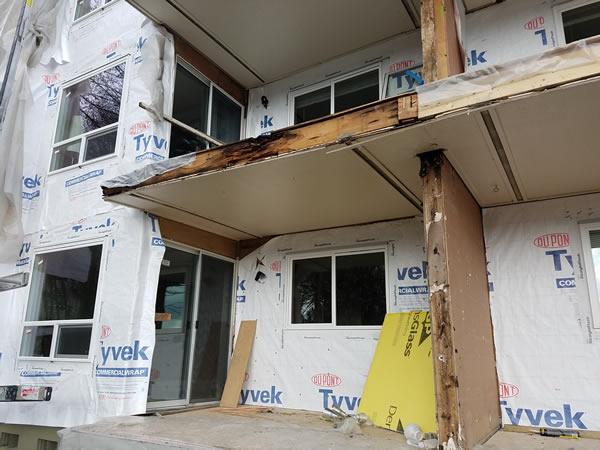
Construction defects and failures to maintain condominium buildings can result in extensive property damage, costly repairs, insurance disputes, and litigation.
These issues frequently involve determining whether responsibility for a particular building component belongs to the condominium association, an individual unit owner, a developer, a contractor, or another party.
The allocation of maintenance and repair responsibilities often depends upon the condominium declaration, the classification of the affected property, applicable statutory provisions, and the circumstances surrounding the damage.
Bilodeau Capalbo, LLC represents condominium associations and unit owners in construction defect and property damage matters involving:
Our construction litigation experience allows us to evaluate these disputes from both a legal and practical construction perspective.
We represent clients in claims against developers, contractors, subcontractors, design professionals, condominium associations, and other potentially responsible parties when supported by the applicable facts and law.
One of the most frequent sources of condominium litigation involves determining whether a particular portion of the property constitutes a unit, common element, or limited common element.
Common elements generally include portions of condominium property that are not part of individually owned units. Limited common elements are common elements allocated for the exclusive use of one or more, but fewer than all, units.
The legal classification of roofs, exterior walls, balconies, patios, windows, parking areas, utility systems, and other property components can significantly affect maintenance obligations, repair costs, and ownership rights.
A component’s exclusive use by one owner does not necessarily establish that the owner is responsible for every associated repair or expense.
Our attorneys review condominium declarations, plats and plans, bylaws, and applicable statutes to determine the respective rights and responsibilities of associations and unit owners.
Condominium associations rely upon assessments to fund maintenance, insurance, repairs, utilities, capital improvements, and other common expenses.
When owners fail to pay assessments, associations may face financial shortfalls that affect the entire condominium community.
Rhode Island law provides condominium associations with statutory mechanisms for collecting delinquent assessments and enforcing liens against condominium units.
R.I. Gen. Laws § 34-36.1-3.16 addresses condominium assessment liens, including lien priority and collection-related rights and obligations.
R.I. Gen. Laws § 34-36.1-3.21 addresses condominium lien foreclosure procedures.
In Twenty Eleven, LLC v. Botelho, 127 A.3d 897 (R.I. 2015), the Rhode Island Supreme Court addressed the effect of foreclosure of a condominium association’s statutory super-priority lien upon a previously recorded first mortgage.
The Court held that foreclosure of the super-priority lien extinguished the first mortgage where the mortgage holder failed to exercise its statutory redemption rights.
Condominium lien enforcement is a significant legal remedy requiring careful compliance with applicable statutory requirements.
Bilodeau Capalbo, LLC represents condominium associations in matters involving delinquent assessments, collection demands, assessment liens, foreclosure proceedings, and related litigation.
We also represent unit owners in disputes involving allegedly improper assessments, collection practices, liens, and foreclosure actions.
Disagreements may arise concerning the amount of an assessment, the allocation of common expenses among units, the validity of a special assessment, or the authority of a board to change assessment methods.
In Mullowney v. Masopust, 943 A.2d 1029 (R.I. 2008), the Rhode Island Supreme Court considered a condominium association’s attempt to modify the allocation of common expenses contrary to the requirements of the Condominium Act.
The Court affirmed the determination that the challenged change violated the statute.
This decision illustrates the importance of examining the condominium declaration and statutory requirements before modifying the allocation of common expenses.
Our attorneys represent associations and unit owners in disputes concerning regular assessments, special assessments, reserve funding, expense allocations, and alleged unauthorized financial obligations.
A condominium association’s declaration, bylaws, and rules establish important rights and obligations governing the condominium community.
Disputes frequently arise concerning the interpretation, validity, and enforcement of these documents.
Examples include restrictions concerning pets, parking, noise, renovations, exterior modifications, common-area use, rentals, and other property-related activities.
Although condominium associations possess authority to enforce valid governing documents, that authority must be exercised consistently with applicable statutory requirements and the association’s governing instruments.
Bilodeau Capalbo, LLC represents associations seeking enforcement of condominium restrictions and unit owners challenging enforcement actions.
Our attorneys assist with:
Condominium insurance disputes may involve the association’s master insurance policy, individual unit-owner policies, insurance deductibles, coverage exclusions, and disagreements over responsibility for repairing damaged property.
Water intrusion, fire, storm damage, and construction defects can create disputes concerning whether damage involves common elements, limited common elements, or individually owned portions of a condominium.
Additional disagreements may arise when an insurer denies coverage, disputes the amount of damage, or delays resolution of a claim.
Bilodeau Capalbo, LLC represents condominium associations and individual unit owners in insurance coverage and property damage disputes, including litigation when appropriate.
Our attorneys examine the applicable insurance policies, governing documents, statutory requirements, and circumstances of the loss to evaluate the parties’ respective rights and obligations.
Developing a condominium requires careful preparation of governing documents and compliance with applicable statutory requirements.
The declaration, bylaws, plats and plans, and related documents establish the legal structure of the condominium and define the rights and obligations of unit owners, associations, and developers.
Bilodeau Capalbo, LLC represents condominium developers in matters involving condominium formation, document preparation, development rights, and disputes arising during development and the transition to unit-owner control.
Our services include preparation and review of condominium declarations, bylaws, rules and regulations, amendments, and other governing documents.
We also represent developers in litigation involving construction defects, development rights, contractual obligations, and condominium ownership issues.
Several documents may affect the ownership, administration, and operation of a condominium.
The declaration is the principal recorded instrument establishing the condominium. It identifies the property, units, common elements, allocated interests, and other legally significant rights and restrictions.
The bylaws establish procedures governing the administration of the association, including board operations, meetings, elections, and other management matters.
Rules and regulations govern various aspects of condominium operations and property use, subject to the association’s lawful authority and applicable statutory requirements.
Plats and plans identify the physical layout and boundaries of condominium units and common elements and may be essential to resolving ownership and maintenance disputes.
Recorded amendments may alter provisions of the declaration or other governing documents. Whether an amendment is valid depends upon compliance with the applicable statutory and procedural requirements.
Condominium resale transactions may require disclosures concerning assessments, financial obligations, governing documents, and other matters under R.I. Gen. Laws § 34-36.1-4.09.
Association financial records, meeting minutes, budgets, contracts, and related documents may be important in disputes concerning board decisions, expenditures, assessments, and compliance with statutory obligations.
Our attorneys assist condominium associations, developers, purchasers, and unit owners in reviewing and interpreting these documents.
Not every condominium dispute requires litigation. Some disagreements can be resolved through negotiation, clarification of governing documents, corrective board action, or alternative dispute resolution.
Other disputes involve substantial financial exposure, continuing property damage, contested ownership rights, or conduct requiring immediate judicial intervention.
Bilodeau Capalbo, LLC represents condominium associations, unit owners, board members, and developers in litigation involving contractual disputes, statutory violations, construction defects, maintenance failures, governance issues, assessment collection, and property rights.
Depending upon the circumstances, available remedies may include declaratory judgments, temporary restraining orders, preliminary or permanent injunctions, monetary damages, enforcement of contractual and statutory obligations, and other appropriate judicial relief.
Our attorneys represent clients in disputes involving:
Our attorneys evaluate the governing condominium documents, applicable statutes, relevant judicial decisions, and the factual circumstances of each dispute to determine the appropriate legal strategy.
Where litigation is necessary, Bilodeau Capalbo, LLC provides representation throughout the litigation process, including investigation, preparation of pleadings, discovery, motion practice, hearings, settlement negotiations, and trial.
Certain condominium disputes require immediate legal action to prevent continuing property damage, interference with ownership rights, or other harm that may not be adequately remedied through monetary damages.
For example, disputes may arise when a condominium association denies an owner access to property, refuses to address dangerous building conditions, undertakes unauthorized alterations, or engages in conduct that threatens substantial harm to condominium property.
In appropriate circumstances, a party may seek a temporary restraining order, preliminary injunction, or permanent injunction to preserve existing rights or prevent continuing injury.
Bilodeau Capalbo, LLC represents condominium associations and individual unit owners in proceedings involving requests for emergency and other equitable relief.
Our attorneys evaluate whether the circumstances satisfy the applicable legal requirements for injunctive relief, including the nature of the alleged harm, the likelihood of success on the merits, and the interests affected by the requested order.
Serious condominium governance and financial disputes can threaten an association’s ability to maintain its property, collect assessments, obtain necessary insurance, or carry out essential obligations.
Disagreements among board members, prolonged governance failures, substantial financial problems, and failures to address dangerous building conditions may create circumstances requiring judicial intervention.
Depending upon the facts, applicable statutory authority, ownership interests, and available remedies, litigation may involve requests for court-supervised relief, including the appointment of a receiver where legally authorized.
Receivership is an extraordinary remedy, and the authority to appoint a receiver, the property subject to receivership, and the receiver’s permissible powers must be established under applicable law.
The distinction between property owned by a condominium association and property owned individually or collectively by unit owners may be particularly important when evaluating a proposed receivership.
Bilodeau Capalbo, LLC represents condominium associations, board members, and unit owners in disputes involving association governance, financial administration, maintenance obligations, and requests for judicial intervention.
Our attorneys evaluate the association’s governing documents, statutory framework, property interests, and available legal remedies to determine whether judicial relief is appropriate.
Bilodeau Capalbo, LLC is a member of the Community Associations Institute (CAI), an international organization dedicated to advancing education, professional development, and best practices in the governance and management of condominium associations, homeowners associations, and other common-interest communities.
CAI provides educational resources, industry research, legislative information, and professional development opportunities addressing the legal, financial, operational, and governance issues affecting community associations.
Our firm’s membership in CAI complements our condominium law and litigation practice, which includes representing condominium associations, condominium boards, property management companies, and individual unit owners in matters involving association governance, fiduciary duties, condominium declarations and bylaws, assessment disputes, common-element maintenance obligations, construction defects, insurance claims, and litigation.
Bilodeau Capalbo, LLC represents clients in condominium matters throughout Rhode Island, Massachusetts, and Connecticut. Our attorneys combine practical experience in condominium governance and litigation with a commitment to remaining informed about developments affecting community associations and their members.
Condominium law disputes often require knowledge extending beyond condominium statutes alone. They may involve real estate ownership, contract interpretation, construction defects, insurance coverage, corporate governance, financial obligations, and complex litigation.
Bilodeau Capalbo, LLC combines its condominium law practice with substantial experience in real estate litigation, construction disputes, business litigation, and insurance-related matters.
This multidisciplinary approach is particularly valuable when a condominium dispute involves overlapping legal issues.
For example, a dispute concerning a leaking condominium roof may involve interpretation of the condominium declaration, allocation of common-element maintenance responsibilities, potential construction defect claims, insurance coverage, and the association’s obligation to undertake repairs.
Similarly, a disagreement concerning a board’s authority may require analysis of condominium statutes, recorded governing documents, voting requirements, contractual obligations, and the legal remedies available to an association or individual unit owner.
Our attorneys understand that condominium litigation can have significant consequences for property values, financial obligations, community operations, and the ability of individuals to use and enjoy their property.
We approach these matters with careful attention to the governing legal framework, the available evidence, and the practical consequences of the dispute.
Our firm represents condominium associations and individual unit owners, subject to applicable professional responsibility and conflict-of-interest requirements. We recognize that the interests of an association, its board members, and individual owners are not necessarily identical.
We provide candid legal assessments, responsive communication, and litigation strategies tailored to the circumstances and objectives of each client.
Bilodeau Capalbo, LLC represents condominium associations, condominium boards, individual condominium owners, developers, and property management companies throughout Rhode Island.
Our attorneys assist clients with condominium governance, enforcement of declarations and bylaws, construction defects, common-element disputes, assessment collection, liens, insurance claims, condominium litigation, and related real estate matters.
The firm also maintains legal practices in Massachusetts and Connecticut, where our attorneys represent clients in matters within their respective areas of practice.
Whether you are seeking ongoing legal counsel for a condominium association, challenging an improper board action, pursuing claims for property damage, or defending against condominium-related litigation, our attorneys can evaluate your circumstances and explain the legal options available.
If you are involved in a condominium dispute or require legal guidance concerning condominium governance, property rights, assessments, construction defects, or enforcement of condominium documents, contact Bilodeau Capalbo, LLC.
Our attorneys provide legal representation to condominium associations, board members, developers, property management companies, and individual condominium owners throughout Rhode Island.
We understand that condominium disputes can involve substantial financial exposure, continuing property damage, difficult governance questions, and important ownership rights. Our objective is to provide knowledgeable legal advice and effective representation directed toward protecting our clients’ legal interests.
To discuss your condominium law matter, call Bilodeau Capalbo, LLC at 401-300-4055 or contact our attorneys online.
Bilodeau Capalbo, LLC
1350 Division Road, Suite 102
West Warwick, Rhode Island 02893
Telephone: 401-300-4055